
UI/UX Design Solutions
UX Design Solutions Built for Your Industry and Product Type
User experience problems are not generic and neither are the solutions. A SaaS onboarding flow has different design challenges than a healthcare patient portal or an e-commerce checkout. Klyverai designs UX solutions grounded in your specific user behaviour, your industry constraints, and your conversion goals. We work with SaaS products, e-commerce brands, healthcare providers, B2B platforms, professional services firms, and fintech companies worldwide.

By industry
Which Industries Do We Provide UX Design Solutions For?
Each industry has distinct user expectations, regulatory requirements, and conversion patterns. Klyverai brings vertical-specific UX knowledge to every engagement rather than applying the same design patterns to every product.
SaaS UX focuses on reducing time-to-value in onboarding, improving feature discovery, reducing churn through better in-app guidance, and optimizing trial-to-paid conversion flows. We design with activation metrics and retention data at the center of every decision. Landing pages built for paid traffic connect directly to our performance marketing service so the conversion work flows from ad to product.
E-commerce UX optimization targets the highest-value drop-off points: product pages, cart abandonment, and checkout friction. We combine heatmap analysis, session recordings, and A/B testing to systematically lift conversion rates and average order value. Every change is measured against a pre-established baseline so revenue impact is attributable. Our web development team builds all redesigned pages to the approved specifications.
Healthcare digital products must balance clinical accuracy with patient comprehension, WCAG 2.1 AA accessibility compliance, and privacy-respecting design. We design patient portals, appointment booking flows, and health information interfaces that meet accessibility standards, reduce patient service calls, and make clinical information understandable to non-clinical users.
B2B products serve multiple user roles including admins, end users, and executives, each with different needs and mental models. We conduct multi-stakeholder user research, design role-specific interfaces, and build design systems that allow product teams to ship consistently as the product scales. Consistent brand application across the product connects to our branding service.
Law firms, accountancies, and consultancies need websites that communicate authority, build trust quickly, and convert high-value visitors into enquiries. We design professional service websites with clear value propositions, credibility signals, and contact flows optimized for high-intent visitors. The organic traffic that reaches these pages connects to our SEO service.
Financial product UX must communicate complex information clearly, build trust in a category where trust is low by default, and meet regulatory requirements around transparency and disclosure. We design fintech and financial service interfaces that are clear, compliant, and conversion-optimized at the same time without sacrificing any of the three.
Course enrollment journeys, learning management interfaces, and student portal designs benefit from research into how learners evaluate and commit to educational investments. We design EdTech products that reduce enrollment friction, improve learner retention through better progress visibility, and make complex course information easy to navigate on mobile.
Property search and listing interfaces compete in a high-consideration category where users spend significant time researching before taking action. We design property platforms and agency websites with effective search filters, visual-first property presentation, and lead capture flows that convert high-intent buyers and renters into enquiries without friction.
With 62.7 percent of global web traffic coming from mobile devices, mobile UX is a baseline requirement, not an enhancement. We design mobile-first interfaces with touch-optimized interactions, thumb-zone-aware layouts, and performance-conscious component choices that deliver fast and usable experiences on every screen size and connection speed.
By business size
What UX Design Solution Is Right for Your Business Size?
What UX Solution Fits Your Stage of Growth?
The UX investment that makes sense for a 15-person startup shipping an MVP is completely different from what a 300-person enterprise needs to manage design consistency across six product teams. Every 1 dollar invested in UX returns an average of 100 dollars according to Forrester Research. The question is which UX investment produces the highest return at your specific stage, which is exactly what we scope before recommending any engagement.
Startups: a design foundation that scales
Early-stage businesses need a design foundation they can build on rather than replace in six months. We create minimal but scalable design systems, conversion-focused MVP interfaces, and UX documentation that gives your development team a consistent framework as the product grows. The work is scoped to your budget and focused on the user journeys with the highest commercial impact.
Growing businesses: conversion optimization
Mid-size businesses typically have an established product with identified conversion problems. We run UX audits, prioritize the highest-impact improvements, and deliver a design roadmap ordered by conversion uplift potential. CRO retainers run ongoing A/B testing programs to continuously improve performance month over month based on real user data.
Enterprise: design systems and governance
Large organizations struggle with design inconsistency across teams, slow design-to-development handoffs, and accumulated UX debt. We build enterprise design systems with governance frameworks, train internal design teams on system usage, and provide ongoing maintenance and component expansion as the product evolves.

How we build it
How Do We Deliver UX Design Solutions That Convert?
Research First. Design Second. Measure Always.
Great UX design is a systematic process, not an artistic one. We start with evidence, design based on what the data tells us, validate with real users before handing anything to development, and measure performance after launch. Every phase is documented so you always understand why decisions were made and can brief future designers from a clear foundation.
User research before any design work begins
We never design without evidence. Every engagement starts with heatmap analysis, session recording review, user interviews, or usability testing depending on your budget and timeline. Design decisions made without user data produce interfaces that look considered but underperform commercially. The research phase is not optional and it is not abbreviated.
Accessibility built in from the start, not added before launch
WCAG 2.1 AA compliance is built into every design we produce rather than checked at the end. Accessible design expands your addressable audience, improves your SEO through better semantic HTML, and reduces legal risk. It also consistently improves usability for all users, not only those with disabilities, because the constraints that make design accessible tend to make it clearer for everyone.
Figma handoff files that developers can build from directly
Developer handoff is where most design quality is lost. We produce annotated Figma files with spacing specifications, interaction notes, component variants, and responsive breakpoint documentation so developers can build exactly what was designed without making interpretive decisions that degrade the final result. Our web development team uses these files to build all implementations we handle in-house.
Ongoing CRO testing after launch
A design delivered and left unchanged is an opportunity to improve missed month after month. We offer ongoing CRO retainers that run structured A/B testing programs on your highest-traffic pages, test new design hypotheses every month, and continuously improve conversion rates based on real performance data rather than design preferences. Revenue impact is measured against a pre-set baseline so the value is never assumed.

Real results
UX Design Case Studies
Results From Projects Like Yours
B2B SaaS platform: onboarding activation rate from 23 percent to 61 percent in 30 days
A B2B SaaS company had a 23 percent activation rate on their free trial onboarding flow. Users who did not activate in the first session almost never returned. Our research found that the core value feature was not visible until step five of an eight-step onboarding sequence, and that 68 percent of users abandoned before reaching it. We redesigned the onboarding to surface the core feature in step one, removed three steps that added friction without value, and added contextual tooltips for the two features users interacted with most. Activation rate reached 61 percent within 30 days of the redesign launch.
E-commerce retailer: checkout abandonment from 68 percent to 41 percent in six weeks
An online retail brand had a 68 percent checkout abandonment rate. Session recordings revealed three specific friction points: a mandatory account creation step before payment, a shipping cost that appeared only at the final stage, and a form layout that confused mobile users. We redesigned the checkout as a guest-first flow with transparent shipping cost shown from step one and a mobile-optimized form layout. Abandonment rate dropped from 68 percent to 41 percent within six weeks. The improvement added measurable monthly revenue with no change in marketing spend.
Fintech platform: design system reduces feature shipping time from two weeks to two days
A fintech company had three designers and eight developers producing inconsistent interfaces across the same product because there was no shared component library. Developers made design decisions independently when the Figma files were ambiguous, which created visual inconsistency and accumulated technical debt. We built a full design system covering 64 components, design tokens for all color and typography decisions, and usage documentation for every component. Feature shipping time dropped from two weeks to two days. Visual inconsistency across the product was eliminated. Read all of our work methodologies.
Who does the work
Your UX Work Is Led by a Senior Strategist, Not a Junior Designer with a Template
Experience That Shows Up in the Conversion Numbers
UX agencies that staff junior designers on client projects are not delivering senior research and strategy at a senior price. We built our practice around fewer projects, senior-only delivery, and measurable accountability tied to conversion outcomes, not design awards.
Senior UX Strategist and CRO Lead
Our lead UX strategist has spent 9 years in UX design, conversion rate optimization, and design system development. Before this practice, they led UX redesigns for a SaaS product from 23 percent to 61 percent activation rate over two product cycles through research-driven design decisions. They personally oversee every research phase, design direction review, and CRO test strategy. They are a contributor to Nielsen Norman Group UX research panels and have published methodology guides on SaaS onboarding design referenced by industry publications. Replace this with your real expert background before go-live.
What this means for your project
You work with one senior UX strategist from the first research session through to the final Figma handoff. Not a sales person who briefs a junior designer from a generic template. The person who analyzes your heatmaps is the same person who directs the design and presents the results. That continuity produces work that is grounded in your specific users rather than in what the designer has seen work elsewhere.

How Do We Build Your UX Design Solution? Five Steps, Clear Deliverables.
Every phase has a defined output and a realistic timeline. Nothing moves to the next phase until the current one is complete and approved.
Step 1: Research and Diagnosis
Heatmap and session recording analysis, user interviews with your actual customers, analytics review identifying drop-off points by page and device, competitor UX benchmarking, and heuristic evaluation of your current interface against established usability principles. We produce a written research report that prioritizes findings by revenue impact, not by design preference or personal opinion.
Step 2: Design Strategy
User personas built from research data rather than assumptions, journey maps for each key user type, a prioritized list of design interventions ordered by expected conversion impact, and a project scope that allocates design effort where the commercial return is highest. You approve this strategy document before any visual design work begins.
Step 3: Design and Prototype
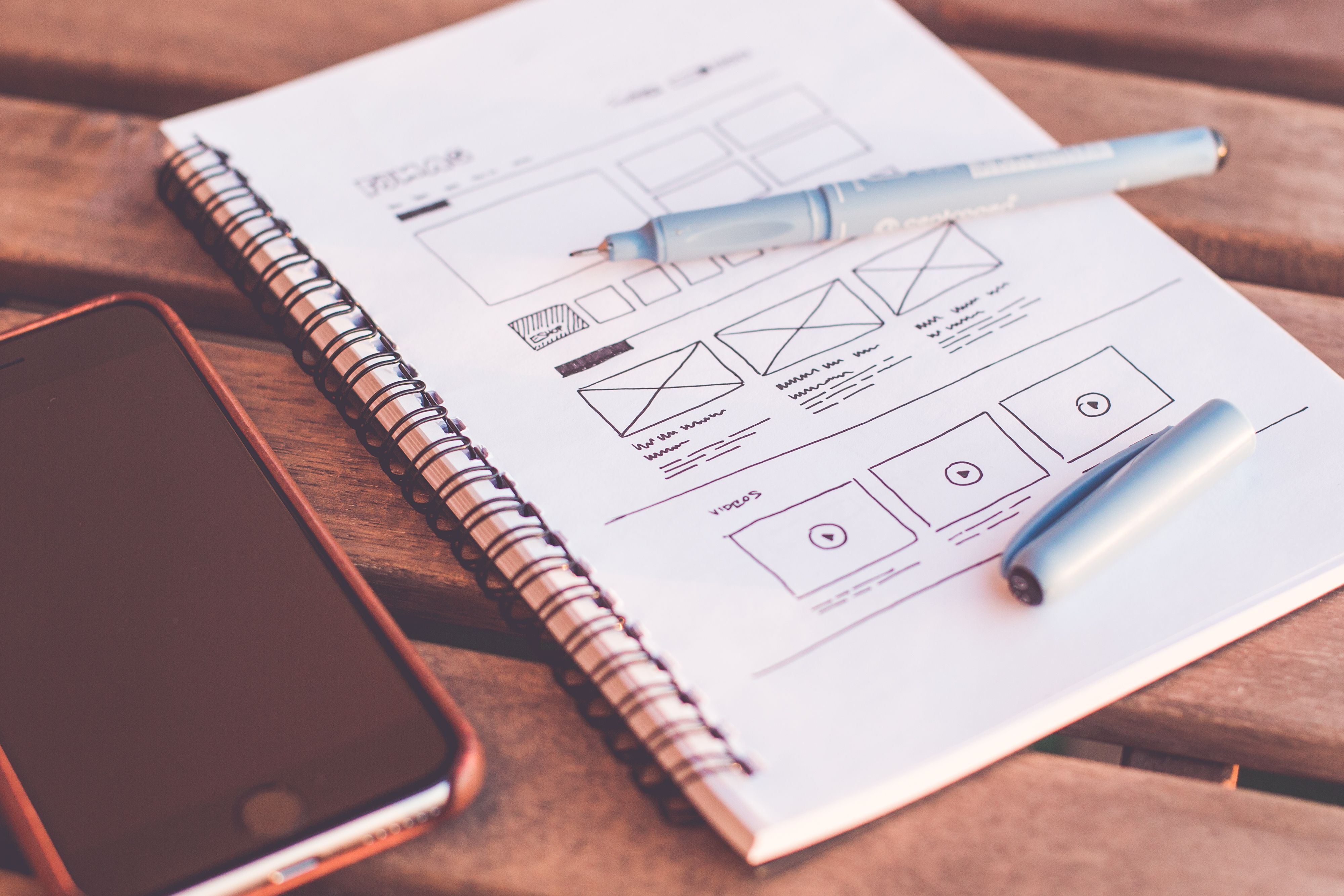
Wireframes for every page in scope, high-fidelity UI designs in Figma, and interactive prototypes for key user flows. You review and approve at every stage. Nothing moves to development until you have seen the design working in prototype form and confirmed it matches your brand, your business requirements, and the research findings it is built on.
Step 4: Usability Testing and Refinement
Moderated usability testing with participants from your target audience. We observe task completion on the prototype, record where users hesitate or fail, and iterate the design based on findings before any development begins. This phase prevents the most expensive form of rework, which is discovering UX problems only after the build is complete and live.
Step 5: Handoff and Post-Launch Optimization
Developer handoff with fully annotated Figma files, a component library, spacing specifications, interaction notes, and responsive breakpoint documentation. Post-launch performance monitoring for three months to confirm conversion improvements against the pre-set baseline. For ongoing CRO clients, structured A/B testing begins in month two targeting the next highest-impact conversion opportunities.
What you receive
What Do You Get When You Work With Klyverai on UX Design?
Every Engagement Includes These Deliverables
Written research report you own from day one, design strategy document, wireframes, high-fidelity Figma designs, interactive prototype, usability testing findings, developer-ready annotated handoff files, three months of post-launch performance monitoring, and a measured conversion improvement tied to the baseline we set before work began.A written research report before any design work begins
The first deliverable in every engagement is a written UX research report covering heatmap findings, session recording analysis, user interview insights, and a prioritized list of design interventions ranked by conversion impact. You own this report regardless of what happens next. Most clients use it to align their product and marketing teams before design work starts.
High-fidelity Figma designs you can take to any developer
All final design files are delivered in Figma with full component structure, design tokens, annotation layers, and a master component library. The files are built to be handed off to any development team, not locked in a proprietary system that requires our ongoing involvement to interpret. Our web development team builds from these files for all implementations we handle in-house.
Measurable conversion improvement tied to a pre-set baseline
Before any design work begins we record the conversion rate, bounce rate, and task completion rate for every page and flow in scope. After launch we measure the same metrics to produce an attributable improvement figure. Every engagement ends with a clear number that connects the UX investment to commercial outcomes, not a portfolio case study with no revenue connection.
Paid traffic converts better when the landing experience is right
UX that converts organic traffic also converts paid traffic more efficiently, lowering your cost per acquisition across every channel. When we design pages that will receive paid traffic we brief our performance marketing team on the conversion intent so the landing experience and the ad creative are aligned rather than designed independently.

What Makes This Different from a Standard UX Design Engagement?
Most UX agencies start with Figma. We start with user research. Here is what that difference produces.
| Klyverai | Typical UX Agency | |
|---|---|---|
| Starting point | User research and heatmap analysis | Straight to wireframes or Figma |
| Conversion baseline | Set before work begins, measured after launch | Rarely established or tracked |
| Accessibility | WCAG 2.1 AA built into every design from the start | Checked at the end if at all |
| Figma handoff quality | Annotated, component-structured, developer-ready | Often incomplete, requires interpretation |
| Who manages your project | Senior UX strategist from research to handoff | Junior designer or rotating team |
| Usability testing | Conducted before development begins on every project | Optional, often skipped on budget |
| Post-launch support | Three months monitoring and CRO retainer available | Ends at file delivery |
| Paid traffic alignment | Landing pages briefed with performance marketing team | Designed in isolation from ads |
UX Design Works Best Alongside These Services
Good UX converts the traffic you earn through SEO and the traffic you pay for through performance marketing. These services make the full picture work together.
FAQs
UX Design Solutions: Frequently Asked Questions
Direct answers to the questions businesses ask most before starting a UX design project. No jargon, no sales language.
How does UX design differ between industries?
UX design priorities and constraints differ significantly by industry. Healthcare UX must balance clinical accuracy, patient comprehension, and WCAG 2.1 AA accessibility compliance. E-commerce UX focuses on removing purchase friction at product pages, cart, and checkout. SaaS UX targets activation and feature discovery in onboarding flows. Financial UX requires trust-building design and regulatory transparency. B2B product UX serves multiple user roles with different mental models. The research and design methods are the same but the success metrics, regulatory constraints, and user expectations differ substantially across sectors.
What UX investment makes sense for an early-stage startup?
An early-stage startup benefits most from a focused UX engagement covering their core conversion flow rather than a full product redesign. A targeted 4-week engagement covering user research, wireframing, and high-fidelity Figma design for the most important user journey produces faster ROI than a comprehensive redesign that delays launch. The goal at the startup stage is a design foundation that scales as the product grows, not a design that needs replacing in six months.
How do you measure the ROI of UX design improvements?
UX ROI is measured through specific conversion rate changes on targeted pages, task completion rates in usability testing, bounce rate improvements, and for SaaS products the change in activation and retention rates. Klyverai establishes baseline metrics for every page in scope before any design work begins so improvements are attributable rather than assumed. Every 1 dollar invested in UX returns an average of 100 dollars according to Forrester Research.
What is a design system and when does a business need one?
A design system is a library of reusable UI components, design tokens, and usage documentation that allows multiple designers and developers to produce consistent interfaces without rebuilding components from scratch. A business needs a design system when it has more than one designer or developer working on the same product, when visual inconsistency is creating user confusion or slowing development, or when the cost of redesigning components repeatedly is delaying releases.
How long does a UX design project take from research to handoff?
A focused UX engagement for a specific user flow such as a checkout, onboarding sequence, or contact journey typically takes 3 to 6 weeks from user research to developer handoff. A full website or product redesign covering multiple user journeys takes 8 to 16 weeks. Timelines vary based on the number of user types in scope, the pages being redesigned, and the rounds of stakeholder review required at each phase.
What UX design solutions does Klyverai provide?
Klyverai provides UX audits, heatmap and session recording analysis, user research and usability testing, wireframing, high-fidelity Figma design, interactive prototypes, design system development, WCAG 2.1 AA accessibility compliance, developer-ready annotated handoff files, and ongoing CRO retainers with structured A/B testing. Solutions are scoped by industry and business size so the work addresses your specific users and conversion problems.
Find Out Exactly Where Your Product Is Losing Conversions
Free UX audit with no obligation. We review your highest-traffic pages with heatmap and analytics data, identify your three most impactful conversion problems, and deliver a written summary of findings you keep regardless of what happens next. Typical turnaround: 5 to 7 business days.